Sleep Psychology
When Thoughts Race at Night: A Low-Pressure Wind-Down
2026-03-01 · Updated 2026-03-03 · 6 min read
A low-pressure wind-down framework that uses touch and quiet audio as an optional attentional anchor.
Why bedtime thinking loops feel so intense
When the room gets quiet, planning or replaying the day can feel more noticeable. Trying to force those thoughts away may add pressure.
Trying to suppress these thoughts often increases pressure. A better strategy is controlled redirection.
Use an anchor that is active but gentle
A useful anchor must occupy just enough attention to prevent rumination without becoming a performance task.
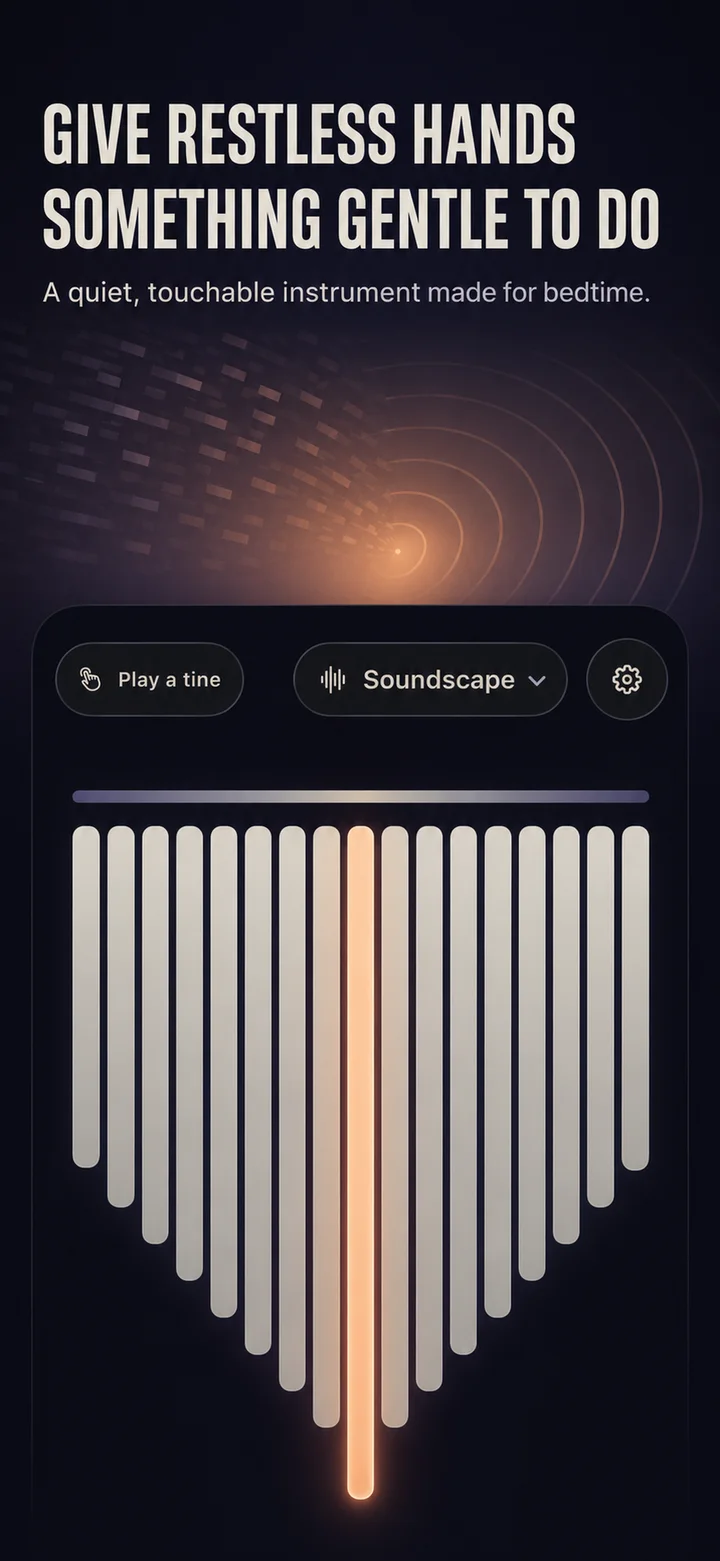
Touch-generated sound combines a small movement with immediate, predictable feedback. You can try it as an attentional anchor without expecting a specific sleep outcome.
- Micro-touch gestures provide a concrete activity
- Haptic feedback confirms each interaction
- Stable tonal mapping avoids wrong notes
Build a simple wind-down sequence
Start with 4 minutes of free touch exploration, pause for a few comfortable breaths, and finish with slower interaction. SomniTine itself does not guide breathing.
The goal is not perfect calm. Stop or change the routine if it is not comfortable or useful.
When to seek more support
SomniTine is not a treatment for anxiety or insomnia. The NCCIH sleep overview describes the evidence and points to cognitive behavioral therapy for insomnia as the most strongly recommended treatment for chronic insomnia.
Try the routine with a touch instrument
Use SomniTine for touch-generated sound, optional haptics, and a fixed ten-minute session. Stop whenever the experience is not comfortable.